
Simplify Your Workflow: Open Z04 Files With FileViewPro
페이지 정보
작성자 Pearlene 작성일 25-12-09 20:27 조회 17 댓글 0본문
A file ending in .Z04 is typically a numbered slice of a larger multi-part archive produced by WinZip, WinRAR, 7-Zip, PowerArchiver, or similar software. Most commonly it belongs to a split ZIP archive, where files are divided into pieces named .z01, .z02, .z03, .z04 and finally .zip, with each numbered part holding a portion of the compressed data while the last .zip segment stores the central directory and file list. Some file catalogs also describe .Z04 as a split multi-volume RAR file, where the same idea applies: each segment is required to rebuild the complete RAR archive and extract its contents. Because of this segmented design, a .Z04 file on its own is incomplete and will usually appear "corrupt" if you try to open it directly; the correct workflow is to place all parts in the same folder and open either the main .zip file or the first volume of the RAR set in your archiver so it can read every segment in order. Tools like FileViewPro effectively turn a confusing array of .z0N pieces into a single, straightforward extraction process, so you can focus on the recovered files rather than on how the archive was split.
Compressed files are digital containers designed to make data smaller, more portable, and easier to manage. At their core, they work by looking for repeating patterns and unnecessary duplication so the same information can be written in a shorter form. As a result, your storage space stretches further and your transfers are completed with less waiting time. Whether it is one spreadsheet or a full collection of mixed files and subfolders, everything can be bundled into a single compressed package, combined into a single compact unit that is noticeably smaller than the source material. This flexibility explains why compressed files show up in so many places, including installers, system backups, shared folders, and large media collections.
Compressed archives only became practical after key breakthroughs in compression theory and widespread adoption of home and office PCs. Early on, academics including Lempel and Ziv created methods such as LZ77 and LZ78, proving that you could spot repetition in a data stream, store it in a shorter form, and still rebuild every bit exactly. These ideas eventually led to widely used methods like LZW and DEFLATE, which power many popular compression formats today. Later, in the PC era, programmers including Phil Katz turned compression into something practical for home users through utilities like PKZIP, effectively standardizing ZIP archives as a convenient way to package and compress data. If you cherished this article and you also would like to be given more info with regards to Z04 file unknown format i implore you to visit our web site. Over time, other developers and companies added new formats that focused on higher compression ratios, stronger encryption, or better error recovery, but the basic idea stayed the same: take one or more files, apply an algorithm, and produce a smaller archive that is easier to move and manage.
On a technical level, compressed files rely on one or more algorithms that are usually described as lossless or lossy. Lossless compression preserves the original data bit-for-bit, making it essential for documents, software, databases, and configuration files. Formats such as ZIP, 7z, and many archive-style containers use lossless techniques to ensure that files can be restored exactly as they were. On the other hand, lossy methods trade some detail for dramatic size savings, most commonly in music, film, and visual content. Although we often treat a compressed archive and a compressed video or song as different things, they rest on the same basic idea of spotting patterns, removing redundancy, and encoding everything efficiently. Many compressed archives also combine both the act of shrinking the data and packaging multiple files and folders into one unit, turning compression into a tool for both efficiency and organization.
Improved hardware and connectivity did not make compression obsolete; instead, they turned archives into essential building blocks in more complex workflows. One major use case is software delivery: installers and app bundles are often compressed so users can get them faster and then expand them locally. Game developers bundle textures, sounds, levels, and configuration files into compressed assets to reduce load times and save storage space while keeping updates manageable. Operations teams routinely compress old logs, database dumps, and configuration snapshots so they are easy to store and transfer. In the cloud, compression plays a quiet but crucial role in keeping large-scale storage and data transfer efficient enough to be affordable and responsive.
Beyond everyday transfers, compression has become a backbone for serious archival and security-focused workflows. With compression, large historical datasets and personal collections that would otherwise be unwieldy become easy to back up and move. Many archive formats include integrity checks so users can verify whether the contents are still intact or have been corrupted over time. When privacy is a concern, encrypted compressed archives offer an extra layer of defense on top of size reduction. This combination of compactness, structure, and optional security has made compressed files a natural home for financial records, contracts, proprietary code, and other confidential material.
From a user’s point of view, compressed archives make many routine tasks smoother and less error-prone. Instead of sending dozens of separate attachments, you can place them in a folder, compress it, and share a single smaller archive that is faster to upload and download. Because the layout is kept inside the archive, everyone sees the same structure after extraction. Backup tools frequently use compressed archives so they can capture snapshots of entire folders or systems efficiently. Learning how to open, inspect, and extract compressed archives has therefore become a basic computer skill, not just something for advanced users or IT professionals.
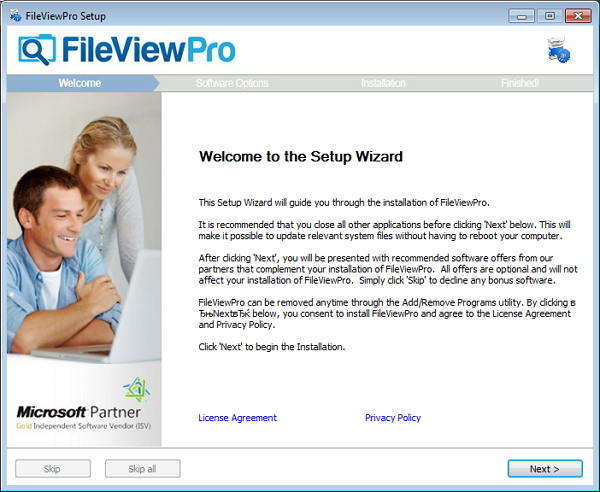
Because so many different compression formats exist, each with its own structure and sometimes its own features, users often need a straightforward way to open and work with them without worrying about which tool created the file. Instead of guessing which program to use, you can rely on FileViewPro to identify and open the archive for you. By centralizing the process into one application, FileViewPro makes it easier to browse archive contents, preview files, and choose exactly which items to restore. In everyday use, FileViewPro acts as the bridge between sophisticated compression algorithms and a straightforward, familiar viewing experience.
Looking ahead, compressed files will continue to adapt as storage devices, networks, and user expectations evolve. Newer compression methods are being tuned for today’s needs, from huge scientific datasets to interactive online experiences. At the same time, the everyday purpose of compressed files remains familiar: we still need to move large information through limited connections and keep our devices from filling up too quickly. From personal use to professional environments, compressed archives quietly support tasks that would otherwise be slow, awkward, or expensive. By pairing advanced compression formats with an accessible viewer like FileViewPro, the benefits of smaller, smarter files become available to every user, not just technical experts.
- 이전글 Exploring SV388: The Online Cockfighting Phenomenon
- 다음글 SV388: The Intersection of Online Cockfighting and Traditional Cockfighting Practices
댓글목록 0
등록된 댓글이 없습니다.


