
High-Quality Counterfeit Money Tools To Streamline Your Everyday Lifet…
페이지 정보
작성자 Twyla Rothstein 작성일 25-12-10 00:16 조회 2 댓글 0본문
The Rise of High-Quality Counterfeit Money: Understanding the Threat and Response
In a progressively cashless society moved by digital deals, one might assume that the risk of counterfeit money is subsiding. However, the emergence of high-quality counterfeit currency continues to present a substantial challenge for federal governments, services, and individuals alike. Counterfeiters are utilizing sophisticated strategies, making fake bills almost indistinguishable from authentic currency. This post aims to clarify the phenomenon of high-quality counterfeit money, the techniques used by counterfeiters, the various classifications of counterfeit bills, and precautions that individuals and businesses should take to protect themselves.
Comprehending Counterfeit Money
Counterfeit money describes currency that has actually been reproduced without legal authorization, meaning to trick people and companies into accepting it as genuine. Historically, counterfeiting has been a persistent issue, and as innovation evolves, counterfeiters end up being more sophisticated in their approaches. High-quality fakes can avert detection by basic authentication approaches, presenting severe threats to the economy.
Table 1: Historical Context of Counterfeiting
| Date | Event/Innovation | Impact on Counterfeiting |
|---|---|---|
| 1861 | Intro of paper currency | Increase in counterfeiting due to absence of security features |
| 1929 | Redesign of U.S. currency | Enhanced anti-counterfeiting procedures |
| 1990s | Digital printing technology | Surge in high-quality counterfeits |
| 2003 - 2013 | Intro of polymer notes | Enhanced physical security functions |
The Methods of Production
Counterfeiters are utilizing numerous production techniques to reproduce real currency. Some of the most common methods include:
Digital Printing: With the schedule of high-resolution printers and scanners, counterfeiters can reproduce bills with alarming accuracy. Advanced computer system software permits them to reproduce detailed information such as watermarks and color-shifting inks.
Photography: Some counterfeiters utilize high-quality photographs of authentic bills, which are then manipulated in style software application. This technique permits simple replication without the requirement for sophisticated printing methods.
Plate Making: Professional counterfeiters might reach creating their own printing plates utilizing engraving techniques. This approach provides an even greater quality and credibility to the counterfeit currency but needs innovative abilities and equipment.
Table 2: Common Counterfeit Production Methods
| Method | Description | Quality of Counterfeit |
|---|---|---|
| Digital Printing | Utilizes contemporary printers and design software application | High |
| Photography | Utilizes high-quality images of real currency | Moderate to high |
| Plate Making | Producing metal plates for printing | Very high |
Classifications of Counterfeit Money
High-quality counterfeit currency can be classified into numerous types based upon their sophistication:
Low-Quality Counterfeit: Bills that may look different in texture or color but can still pass in low-stakes situations. Typically produced by unskilled counterfeiters.
Medium-Quality Counterfeit: These bills might consist of some functions of genuine currency however lack elaborate information. They can often be spotted through careful analysis.
High-Quality Counterfeit: Close replicas that can confuse both businesses and banks. They may include advanced security features such as holograms and microprinting.
Expert Counterfeit: Bills produced by competent counterfeiters with access to industrial-grade devices. They can go through banks and ATMs without detection.
Table 3: Categories of Counterfeit Currency
| Category | Description/Characteristics | Detection Difficulty |
|---|---|---|
| Low-Quality Counterfeit | Basic style flaws, poor quality paper | Easy to identify |
| Medium-Quality Counterfeit | Some genuine features however still visibly fake | Moderate detection effort |
| High-Quality Counterfeit | Near real, consists of innovative functions | Challenging to find |
| Professional Counterfeit | Excellent quality; passes the majority of detection methods | Very tough to find |
The Impact on Economy and Society
The threats positioned by high-quality counterfeit money extend far beyond specific loss. The effects ripple through the economy, affecting prices stability and public trust in currency systems. Counterfeit money adds to inflation, weakening both domestic and global markets. The costs of policing, informing the public about counterfeiting, and implementing security measures can strain governmental resources.
Countermeasures Against Counterfeiting
1. Government Initiatives
Enhanced Security Features: Governments are constantly updating their currency develops to incorporate more complex security features, including transparent windows, smart chips, and color-shifting inks.
Public Awareness Campaigns: Educating the public on how to determine counterfeit money and encouraging businesses to invest in point-of-sale detection devices.
2. Company Solutions
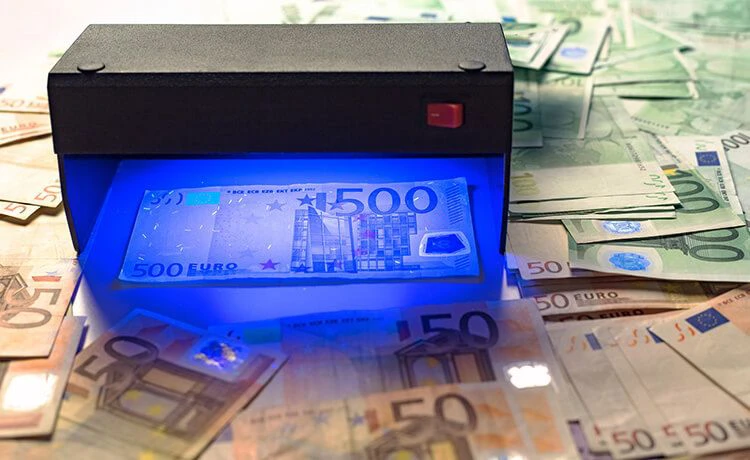
Investment in Detection Equipment: Retailers must utilize counterfeit detection techniques, such as ultraviolet light scanners and magnetic ink detectors.
Staff Training: Training staff members on what genuine currency looks like, along with the common indications of counterfeit money.
3. Individual Precautions
Watchfulness: Individuals must familiarize themselves with the features of their country's currency and be cautious while accepting cash payments.
Making Use Of Digital Payments: Whenever possible, selecting digital transactions can decrease the danger associated with managing physical cash.
FAQ Section
Q1: How can I tell if a costs is counterfeit?
A: Examine the bill utilizing the following functions: watermarks, color-shifting inks, microprinting, and security threads. A counterfeit detection pen can likewise be used.
Q2: What should I do if I get a counterfeit bill?
A: Report the event to regional law enforcement or the nearest bank right away. Try to keep in mind the information of the transaction and the seller.
Q3: What are the penalties for counterfeiting money?
A: Penalties can vary by jurisdiction however may consist of significant fines and long prison sentences. Counterfeiting is thought about a serious federal criminal activity.
Q4: Are there any online resources for detecting counterfeit money?
A: Yes, several resources are readily available, consisting of government websites like the U.S. Secret Service's page on currency security features.

Q5: What function work play in combatting counterfeiting?
A: Businesses can help by training workers, buying sophisticated detection technology, and reporting counterfeit events to authorities promptly.
High-quality counterfeit money remains a developing threat that continues to capture individuals and companies off guard. By comprehending the numerous elements of counterfeiting-- from the methods of production to the advanced nature of high-quality fakes-- financiers, retailers, and the public can take proactive steps to minimize danger. Awareness and education, integrated with sophisticated safety steps, are crucial for combating this ongoing obstacle. As society advances into a period of complex financial deals, remaining notified and vigilant versus counterfeit hazards is more crucial than ever.
- 이전글 What's The Job Market For Residential Window Repair Professionals?
- 다음글 Cats, Dogs and Disposable Vape
댓글목록 0
등록된 댓글이 없습니다.


